

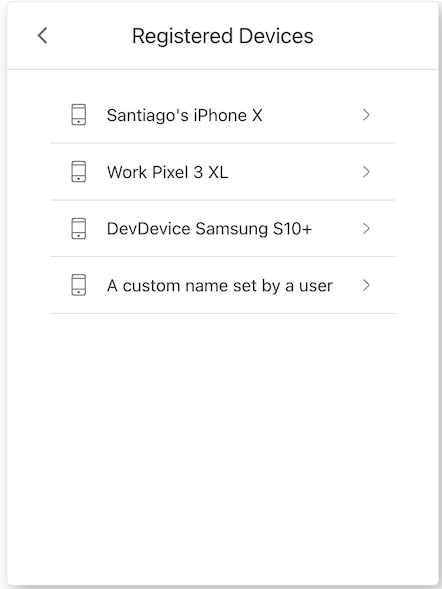
mfa-push-list screen functionality.
Constructors
Create an instance of MfaPushList screenExample
Properties
branding
Provides branding-related configurations, such as branding theme and settings.
client
Provides client-related configurations, such as
id, name, and logoUrl.organization
Provides information about the user’s organization, such as organization
id and name.prompt
Contains data about the current prompt in the authentication flow.
screen
Contains details specific to the screen, including its configuration and context.
tenant
Contains data related to the tenant, such as
id and associated metadata.transaction
Provides transaction-specific data, such as active identifiers and flow states.
untrustedData
Handles untrusted data passed to the SDK, such as user input during login.
user
Details of the active user, including
username, email, and roles.Methods
getErrors
This method retrieves the array of transaction errors from the context, or an empty array if none exist.
This method navigates back to the previous screen.
Example
Optional custom options to include with the request.